Violin Maker
Filip Kuijken
Construction and repair of VIOLINS-VIOLAS-CELLOS
Baroque - Classic - Modern
Welcome,
I would like to give some details about my work and myself.
I started as a professional violinmaker in Belgium in 1993. Since the end of 1999, I have been living and working in Japan.
Ever since the beginning, it always seemed evident to me to be
occupied by the construction of both modern and period - baroque and
classical- style instruments.
So far, I always kept making about the same amount of modern and
period style instruments.
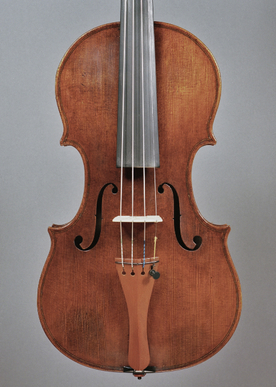
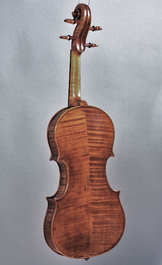
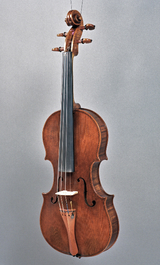
Modern violin
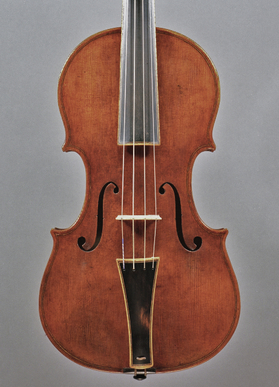
Baroque violin
I do not believe that in the construction and the physical aspects of the instruments, the differences between baroque and modern styles are that big. The main difference is all in a question of tension. Baroque, and late 18th century classical instruments, should all have much less tension than modern, 20th century ones. This is mostly the result of the different construction of the neck angle, combined with the use of lower tension gut strings instead of strings made of steel or other synthetic materials. The strings are also tuned at a lower pitch.
This allows for, or even requires a lighter, more flexible construction for baroque instruments. This can be achieved in the arching and in the thicknessing of the plates, but is mostly done by making a lighter bass-bar.
For more details about the differences among baroque, classical and modern instruments, please read here.
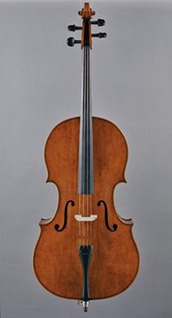
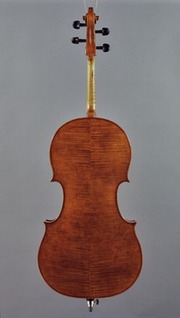
D. Montagnana 1740 Cello
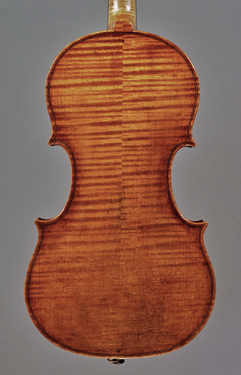
N. Amati 1666
Apart from these differences, the operation of the instruments are the same. How the soundboard and backside are resonating and transmitting tone, does not depend so much on whether their style is baroque or modern. It depends more on the hight and shape of the plates arching, the thickness of the plates, the size and position of the bassbar and soundholes, the characteristics of the wood, and many other factors.
More interesting is the combination of all those factors. To learn about the influence of each feature on each other, keeps inviting me to continue to search and experiment every day.
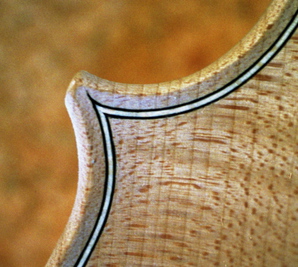
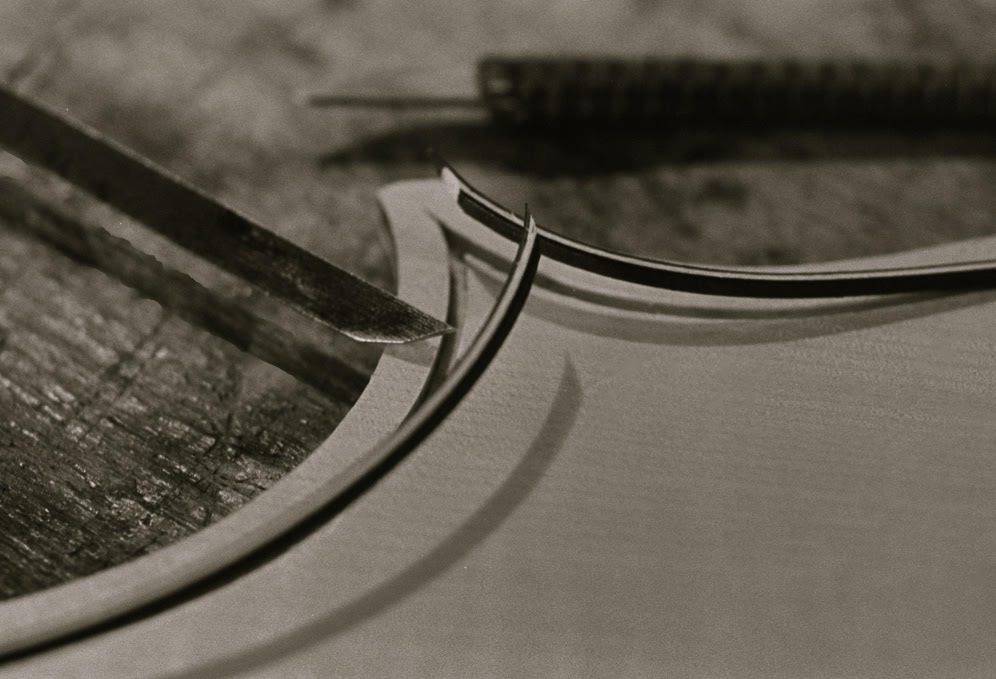
Purfling detail
Another very important point, is the fact that wood is (or was) a living material. Even when coming from the same tree, no two pieces are identical. This means that it is nearly impossible to find an exact formula. By consequence, for every instrument, for every piece of wood, again I have to decide what to do.
Only through many years of work, can one build up the necessary skill and experience to do so.
This is why I only want to make use of hand work, avoid serial work and limit the use of machines. I wish to be in contact with the wood as close as possible during the whole process ; from the selecting and year long drying of the wood, over the bending, carving, thicknessing, till the varnishing and finally stringing of the instruments.
Only by doing so, can I learn to be guided by the density, elasticity, acoustical and all other characteristics of the wood.
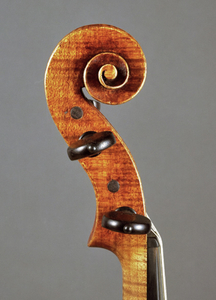
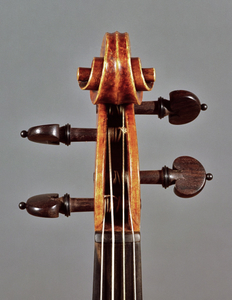
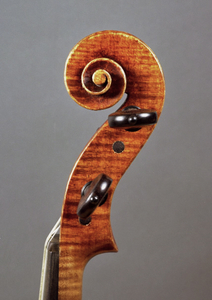
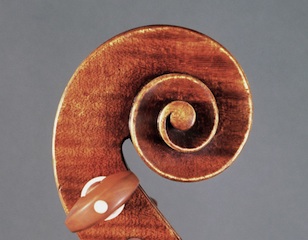
Violin scroll
If you would like more information about models, materials used such as the woods, varnishes, strings etc., or about prices and conditions, please contact me by one of the following methods:
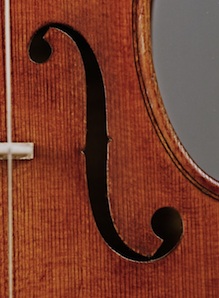
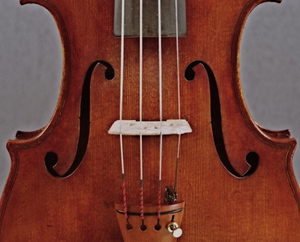
Violin F-hole N. Amati 1666
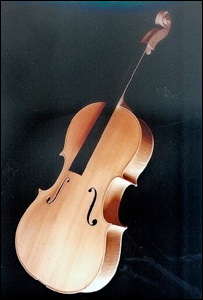
Cello before varnishing
Address :
458 Warime, Kazo-Shi
Saitama-Ken 347-0025
Japan
E-mail :
filip@kuijkenviolins.com
Tel/Fax :
+81 (0480) 650056
Or please visit me in my atelier
(please make an appointement prior to visit)
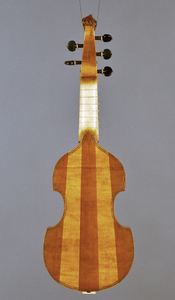
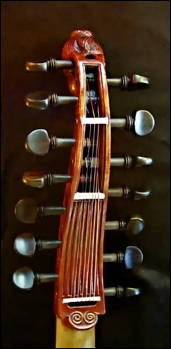
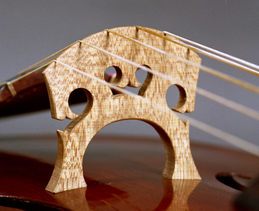
Following is a short list of the models I use most often. All instruments can be made in modern, classical or baroque position. Other models, not on this list, can also be made.
Violin
A. Stradivari : The Betts |
1704 |
G. Guarneri “Del Gesu” : |
|
N. Amati : Alard |
1649 |
M. Gofriller : |
1700 |
J. B. Guadagnini : Lachmann-Schwechter |
1776 |
J. Stainer : |
1679 |
C. Bergonzi : |
1736 |
D. Montagnana : |
1717 |
A. Amati : |
1564 |
F. Kuijken original model |
|
Violino Piccolo : P. Borlon |
|
Viola
A. Guarneri : Conte Vitale |
41.1 cm |
1676 |
J. B. Guadagnini : |
40.0 cm |
1785 |
A. Stradivari : The Gibson |
40.8 cm |
1734 |
A. Amati : |
47.0 cm |
1574 |
P. Rombauts : |
42.0 cm |
|
F. Kuijken : original model |
|
|
Cello
A. Stradivari : De Munck |
1730 |
D. Montagnana : Sleeping Beauty |
1739 |
G. B. Guadagnini : |
1759 |
A. Amati : |
158? |
F. Kuijken : original model |
|
Cello Piccolo (5-string) : F. Kuijken |
|
Viola D'Amore
F Kuijken : original model
Pochette Violin
F Kuijken : original model
Basse de Violon
G Bourbon : 1702
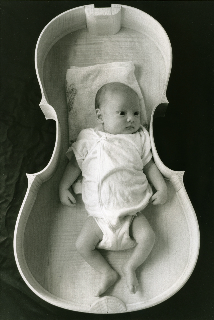
There are few things I enjoy more than working in my atelier in all tranquility.
Sometimes, after having switched on the radio, I suddenly realize I’m not working anymore, I’m just listening to the music...
This doesn’t happen so often, but when it does, it is not because they are playing loud...
Copyright © Filip Kuijken 2009-2019